The Tigray village that chose to stay and restore its land
Offered relocation from their degraded, drought-hit valley, villagers in Tigray chose instead to restore it with terraces, check dams, hillside enclosures and hand-dug wells.
On this page
The small thing
In 1998, faced with a government offer to move to a more fertile area, the villagers decided to stay and start repairing their own land. Their leader, Aba Hawi, urged others to follow by trying new techniques on his own farm first.
The problem
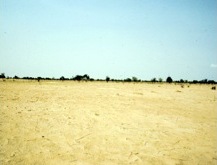
Abreha We Atsbeha lies in one of the most degraded parts of eastern Tigray. Bare hillsides could no longer hold rain, groundwater was not being recharged, flash floods damaged farmland and soil was washing away. After years of crop failure, households depended on relief food.
Why the people of Abreha We Atsbeha started
According to Mekelle University researchers, the government offered residents a choice: relocate, or restore the landscape with support from the Ministry of Agriculture. Residents found relocation hard to accept and chose restoration, although reaching agreement was difficult at first.
What they did
Families closed degraded hillsides to grazing and wood cutting, letting vegetation return, and built bench terraces, stone bunds, micro-basins and check dams to slow water and trap silt. Community nurseries supplied seedlings, and around 650 hand-dug wells were later used for dry-season irrigation. Fuel-efficient stoves reduced the need for firewood, and the community wrote its own bylaws on sharing benefits.
The work relied heavily on community labour, alongside support from the Relief Society of Tigray, the World Food Programme's MERET land-rehabilitation programme, Mekelle University, regional agriculture bodies and international donors.
What changed
According to the 2020 account by Mitiku Haile and Dawit Gebregziabher of Mekelle University, around 69% of the 6,766-hectare watershed was restored through enclosures, the water table rose from about 50 m to about 5 m below the surface, soil loss fell by 80% and crop production rose by 300%; these figures are the authors' and have not been independently checked here. The village received the UNDP Equator Prize in 2012, and the World Food Programme reported that once-barren hillsides were producing grain, vegetables and coffee.
What they learned
Aba Hawi's approach, as reported by the researchers, was that a leader should be a model farmer and test new techniques and crops first. The researchers concluded that success rested on active local participation and ownership.
“I am getting a reasonable income from a field that was previously covered by sand.”Community of Abreha We Atsbeha, mobilised by village leader Aba Hawi, as quoted by World Food Programme (via PreventionWeb, UNDRR)
Copy this idea
Practical guidance written by our editors from the sources below. Adapt it to your place, and check local rules and safety first.
- Problem addressed
- Eroded hillsides, falling groundwater and repeated crop failure
- What to do
- Close degraded slopes to grazing and cutting, build terraces and small check dams, and recharge groundwater for shallow wells
- Materials and resources
- Local stone and soil, hand tools, tree seedlings from a community nursery
- Approximate cost
- Low
- Skills
- Basic soil and water conservation techniques, ideally with advice from local agricultural extension staff
- Time
- Years; groundwater and vegetation recover slowly
- People needed
- A whole community, with agreed rules
- Difficulty
- Hard
- Risks and limitations
- Conflict over lost grazing or fuelwood access; poorly built structures failing in heavy rain
- How to adapt it
- Start with one small catchment or gully and agree access rules before closing land
- Lessons learned
- Fair rules on who benefits, and leaders who try methods first, matter as much as the engineering
Why it matters
One village's terraces will not reverse land degradation across the Horn of Africa. But Abreha We Atsbeha shows that slow, collective work on water and soil can make a seemingly exhausted landscape farmable again, and that staying put can be a realistic alternative to relocation when people own the decisions.
Policy connection
International commitments this kind of action contributes to. Listing a framework does not mean the person or group was working towards it.
- SDG 15.3: Combat desertification, restore degraded land and soil, and strive for a land-degradation-neutral world.
- UNCCD Land Degradation Neutrality: The framework countries use to set voluntary land restoration targets.
What didn't work
Reaching consensus took time; one account says it took about a decade to persuade everyone to close the hills to livestock and wood harvesting. Heavy rain can damage structures. Residents had hoped to harvest fuelwood from the enclosures but could not, which pushed some towards illegal cutting. The researchers also flag the general risk of works decaying after outside funding ends. The 2020–2022 war affected Tigray; its impact on this watershed is not documented in the sources found.
Editor's note
The most detailed account found dates from 2020 (Mekelle University researchers). Tigray was badly affected by the 2020–2022 war in northern Ethiopia; no source was found describing the state of the watershed works or of Aba Hawi since then, so current condition is unverified.
Sources: how do we know?
Evidence level: Documented. Supported by reliable published sources such as UN agencies, award bodies and reputable journalism. Not yet independently re-verified by our editors. What the person says and what independent sources establish are attributed separately in the text.
- peer reviewed
Successful landscape restoration in Abreha We Atsbeha watershed, Tigray, Ethiopia — Mitiku Haile; Dawit Gebregziabher (Mekelle University), Tropenbos International (ETFRN News 60: Restoring African Drylands), September 2020Supports: 1998 choice between relocation and restoration; Aba Hawi's leadership; measures (enclosures, terraces, 55 check dams, ~650 wells, stoves, bylaws); impact figures; Equator Prize 2012; difficulties - un agency
Ethiopian village recognized at Rio+20 for innovative hunger solution — WFP, World Food Programme (via PreventionWeb, UNDRR), 21 June 2012Supports: 2012 Equator Prize from UNDP; MERET programme; hillsides now farmed; quote from farmer Hiwot Gebre-Tsadkan; award accepted by farmers' association chairman Gebremichal Giday - organisational
Abreha Atsbeha: a community restores a landscape — Liz Rinaudo, FMNR Hub, 22 May 2012Supports: Relocation request in the 1990s; about 10 years to persuade everyone to close the hills; family ponds, check dams, wells; labour arrangements